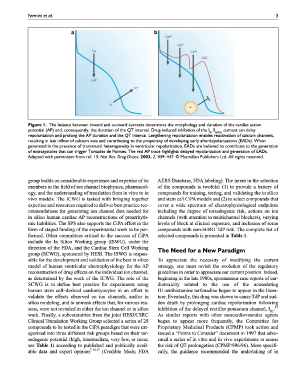
For over a decade, cardiac safety testing has centered on evaluating a drug’s potential to cause dangerous heart rhythm abnormalities — specifically QT interval prolongation and Torsades de Pointes arrhythmia — following guidelines that rely heavily on hERG channel assays and in vivo measurements. While this approach has been effective, it carries significant drawbacks, including unnecessary compound attrition and the high cost of late-stage clinical QT studies. The Comprehensive In Vitro Proarrhythmia Assay (CiPA) initiative, a public-private collaboration, aims to modernize this paradigm by combining standardized multi-ion channel assays, computational modeling of human ventricular action potentials, and confirmation studies in stem cell-derived human cardiomyocytes — with the ultimate goal of more accurately predicting arrhythmia risk and eliminating the need for costly thorough QT studies. This perspective article examines the rationale behind CiPA, the progress made to date, and the challenges that remain if this new framework is to successfully replace existing guidelines and gain broad acceptance across the drug development community.
PUBLICATION: Journal of Biomolecular Screening (2016)
AUTHORS: Bernard Fermini, Najah Abi-Gerges, Jules Hancox, Khuram Chaudhary, Krystle Correll, Paul Levesque, et al.