POSTERS &
PUBLICATIONS

SCIENTIFIC POSTERS

Download heart, lung and pain research posters

TRANSLATIONAL LIBRARY

Human-based scientific evidence

Latest Publications

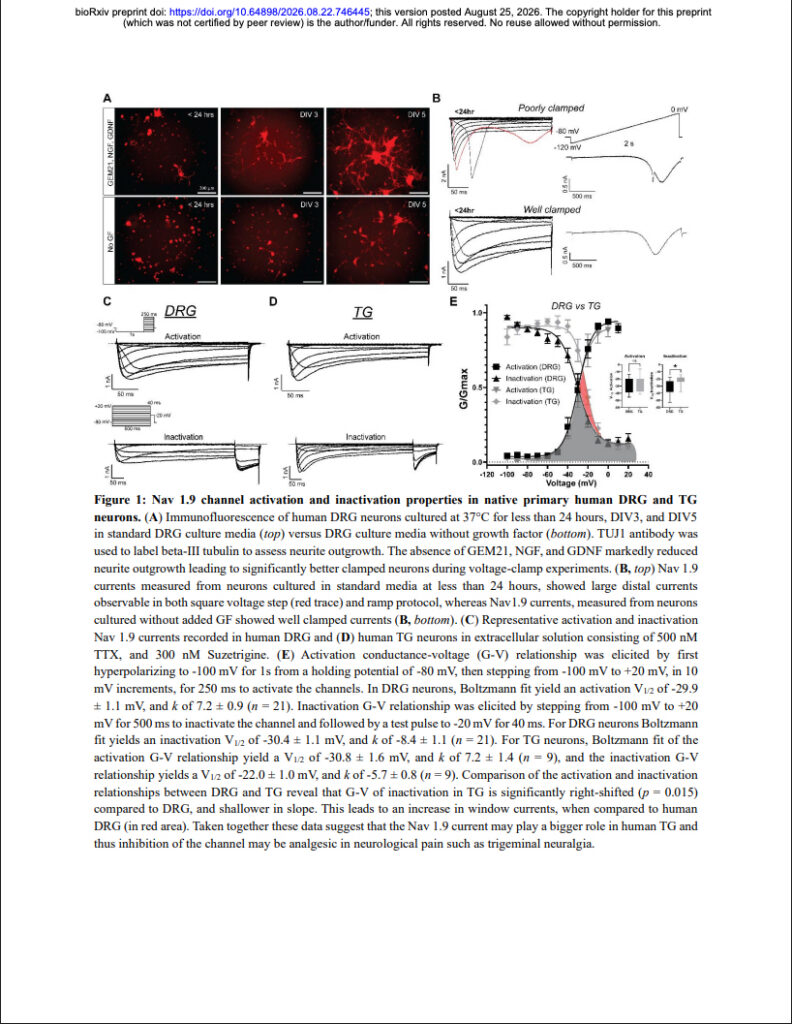
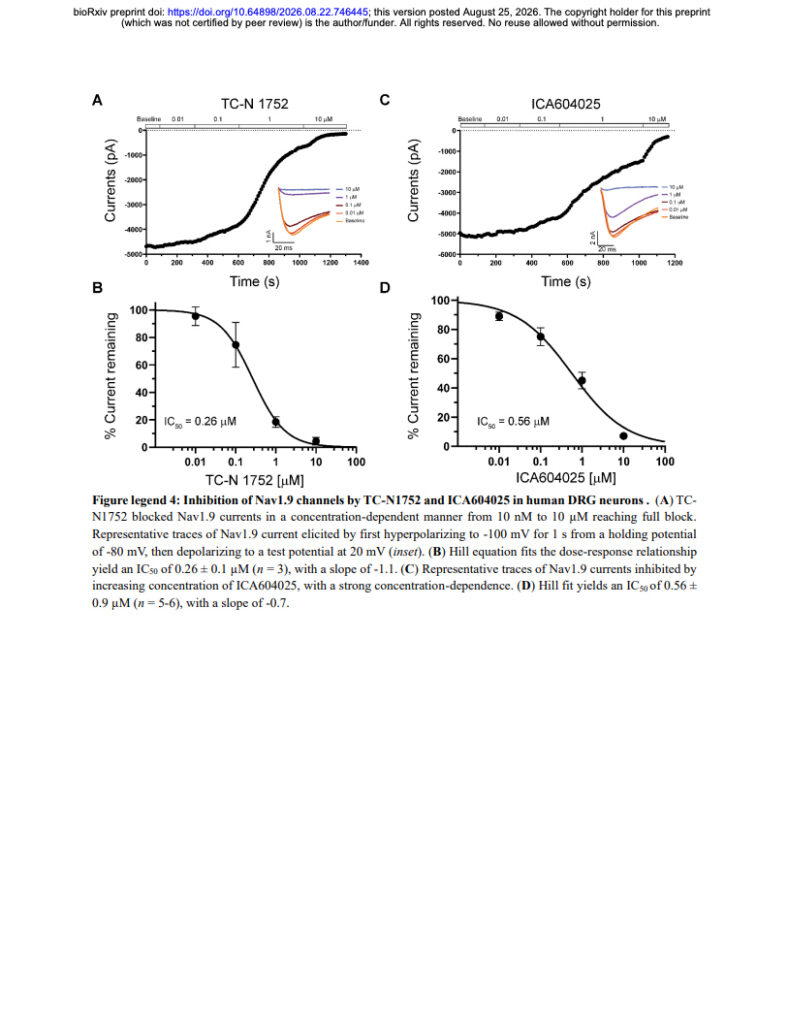
Nav1.9, a TTX-resistant sodium channel encoded by SCN11A, is a validated but poorly characterized target in human pain signaling, with most data to date drawn from rodent models rather than native human tissue. Using human DRG and TG neurons, we pharmacologically isolated and characterized native Nav1.9 currents and found clear differences between the two populations: TG neurons show a right-shifted inactivation curve, larger window current, and faster activation kinetics than DRG neurons. Inflammatory conditions substantially potentiated Nav1.9 currents in both, consistent with rodent findings. These results provide the first detailed biophysical profile of native human Nav1.9 channels, offering a more translatable foundation for analgesic drug discovery targeting acute and chronic pain.

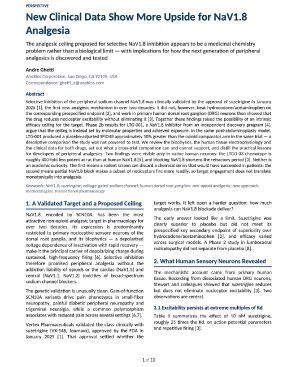
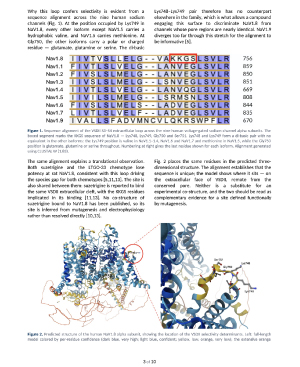
Suzetrigine’s 2025 approval validated NaV1.8 as a pain target, but the drug missed its endpoint against hydrocodone/acetaminophen, and human neuron studies showed it dampens nociceptor firing without eliminating it—raising doubts about how effective NaV1.8 inhibitors can be. New Phase 2b data on LTG-001, a NaV1.8 inhibitor from a separate program, suggests those limits reflect molecule design and drug exposure rather than the target itself: In the same surgical pain model, it outperformed the opioid comparator by roughly 50%. This review examines the biophysics, human tissue data and clinical results behind both drugs, weighs what a cross-trial comparison can support, and highlights two findings visible only in native human neurons—with direct implications for how peripheral analgesics get screened and developed.

This study demonstrates that the selective LPAR1 antagonist PIPE-791 delivers potent antifibrotic activity across primary human lung fibroblasts, precision-cut lung slices from patients with pulmonary fibrosis and multiple in vivo models of lung fibrosis. PIPE-791 reduced collagen production, inhibited myofibroblast transformation, decreased profibrotic gene expression and secreted remodeling biomarkers in human lung tissue, and significantly lowered lung collagen and inflammatory markers in bleomycin-induced models. For AnaBios, these findings reinforce the strategic value of human, tissue-based platforms to generate translationally relevant data that strengthens target validation, improves confidence in mechanism and supports more informed advancement of antifibrotic therapies into the clinic.

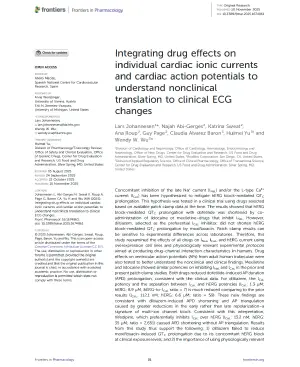
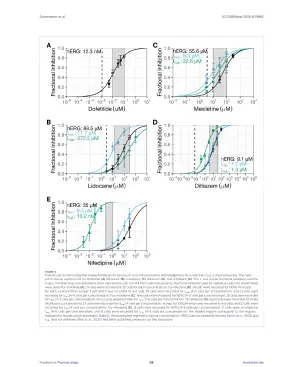
This peer-reviewed study, co-published with scientists from the U.S. Food and Drug Administration, advances the field of cardiac drug discovery by demonstrating how integrated assessment of multiple cardiac ion channels improves translation from nonclinical data to clinical ECG outcomes. Using physiologically relevant patch-clamp protocols and functional recordings from adult human ventricular trabeculae, the research reveals how multi-ion channel interactions—including hERG, late sodium (INaL), and L-type calcium (ICaL) currents—drive action potential dynamics and QT interval changes. The findings highlight the limitations of relying on single-channel assays alone and reinforce the importance of human-relevant cardiac models aligned with ICH S7B best practices for predicting proarrhythmic risk. Together, this FDA–AnaBios collaboration provides cardiac safety scientists and drug developers with a more mechanistic, human-focused framework for evaluating cardiac liability earlier and with greater confidence in drug development.

Cross-species transcriptomic atlas of dorsal root ganglia reveals species-specific programs for sensory function

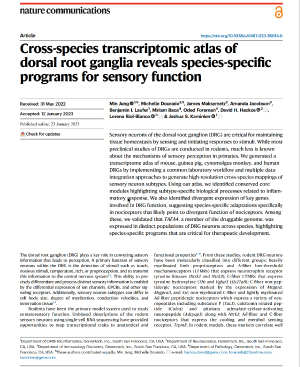
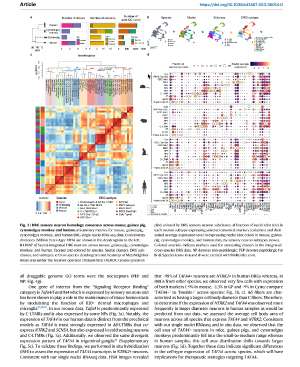
This paper (1) describes a protocol for efficient isolation of DRG nuclei from multiple species, (2) provides the high-resolution, comprehensive, detailed single-nucleus transcriptome atlas of DRG from pre-clinical to human samples, and (3) characterizse the transcriptional convergence and divergence of sensory neuron subtypes from rodents to humans. Thr results reveal that DRG sensory neuron subtypes are in general well-conserved across species. However, the paper identified key differences in gene products involved in pathophysiological processes which point to the potential for species-specific sensory neuron functions. Understanding the molecular and functional similarities and differences between somatosensory neurons in rodents and primates will enable a better understanding of the role of these neurons in sensory perception and tissue homeostasis, facilitating therapeutic efforts targeting sensory neurons.