banner

Human Tissue & Cells › Spinal Cord

Human Spinal Cord Tissue for Pain and CNS Research

Viable spinal cord from healthy and pain-state donors for slice physiology, calcium imaging and molecular studies, with an average RIN above 9.
Human spinal cord tissue
>9 RINAverage RNA integrity
WeeksIn organotypic slice culture
3 Pain StatesFibromyalgia, neuropathic pain, osteoarthritis
3 FormatsFlash frozen, RNAlater, formalin-fixed

Validation Data

Choose a tab. Live network activity and high-integrity RNA from human spinal cord.

FIGURE 1

9 Neurons

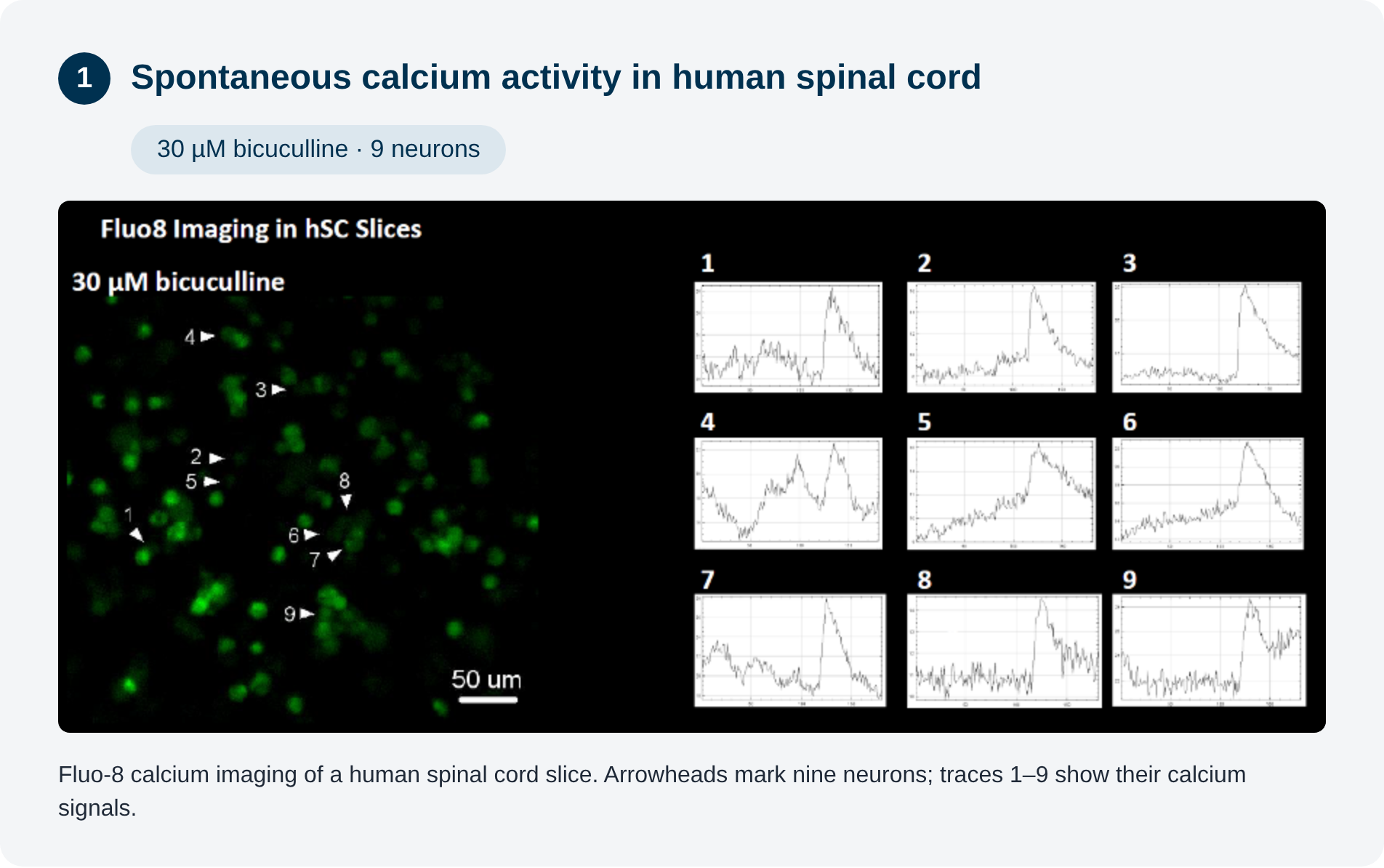
Bicuculline-Evoked Calcium Oscillations

In a Fluo-8-loaded human spinal cord slice, 30 µM bicuculline induced spontaneous calcium oscillations in nine identified neurons.

FIGURE 2

23 Cells

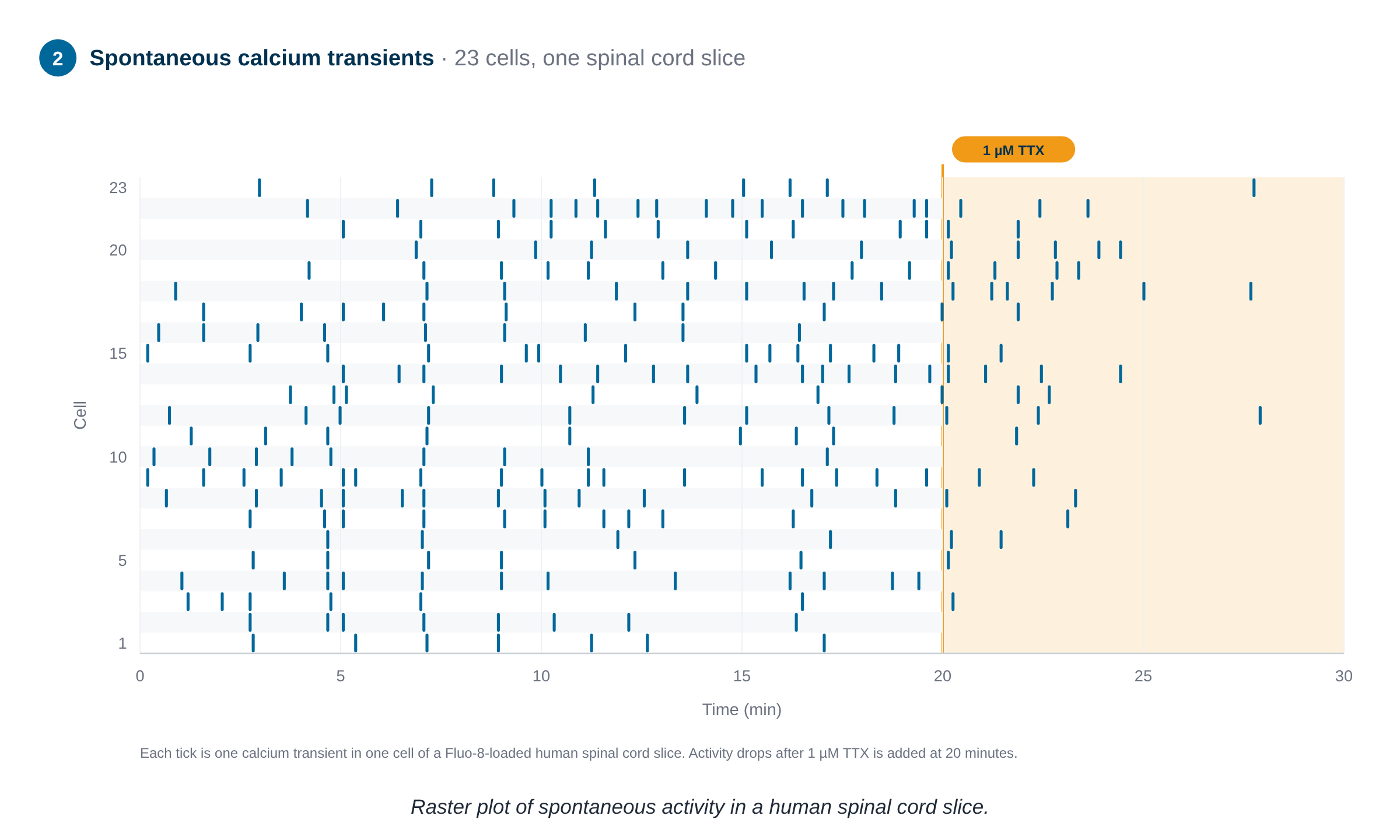
Spontaneous Network Activity

Calcium transients across 23 cells show synchronized bursts. Adding 1 µM TTX at 20 minutes reduced the activity.

VIDEO

Live Dorsal Horn Neurons

Fluo-8-loaded cells in the human dorsal horn, imaged live in a viable spinal cord slice.

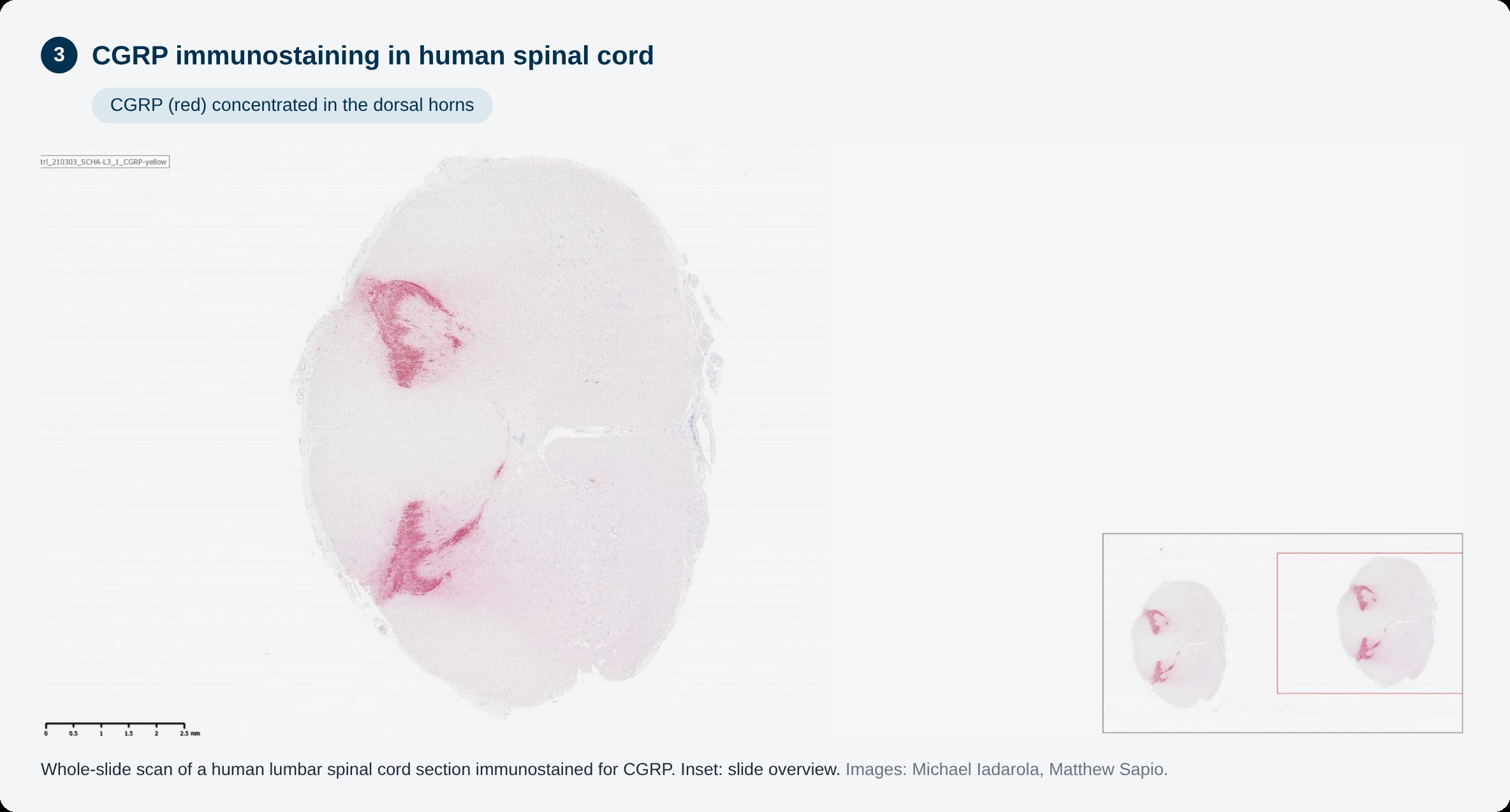
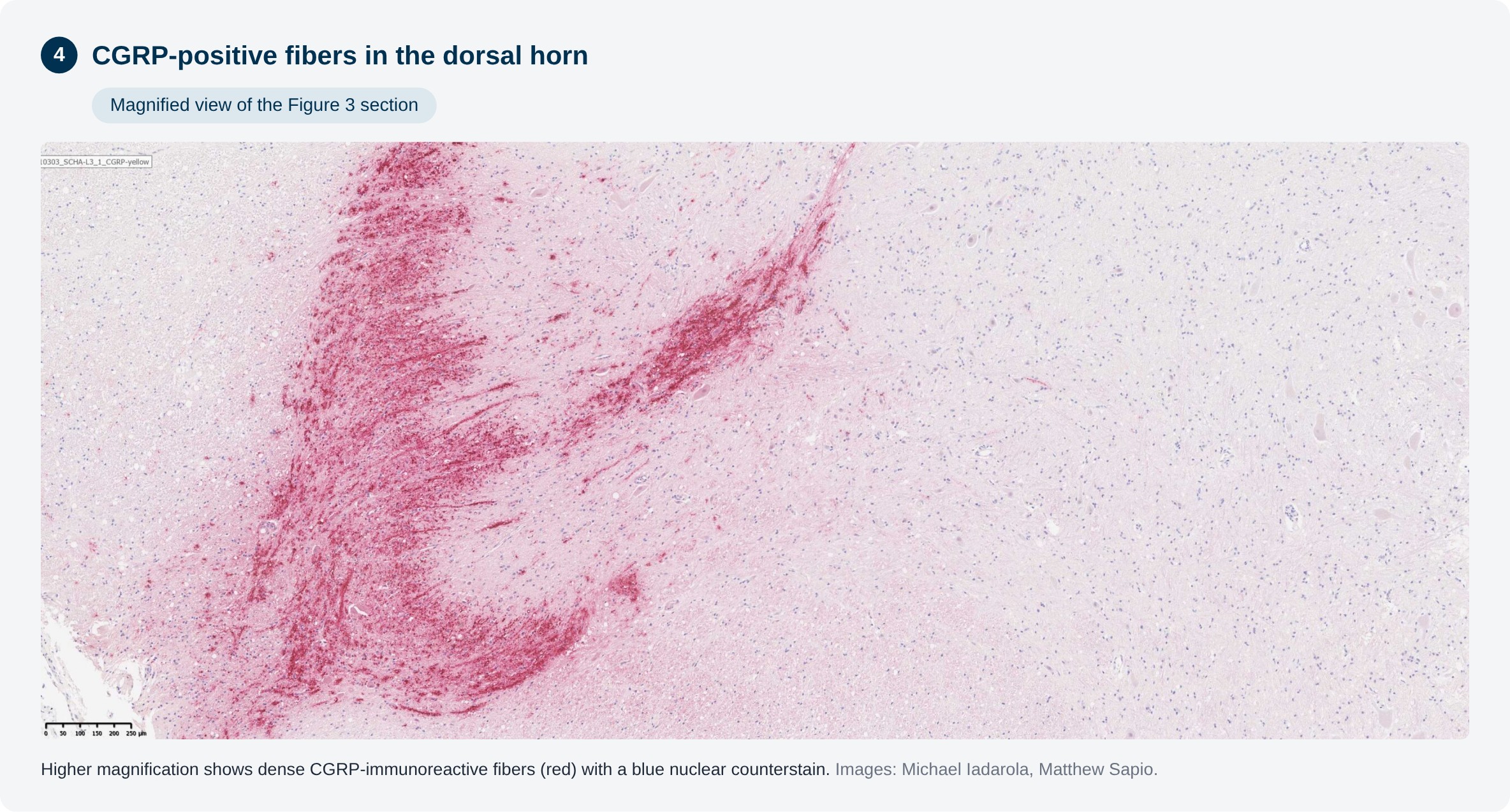
FIGURES 3 AND 4

CGRP in Human Spinal Cord

A whole-slide scan of a human lumbar spinal cord section shows CGRP immunostaining concentrated in the dorsal horns (Figure 3). Higher magnification reveals dense CGRP-immunoreactive fibers (Figure 4).

Images: Michael Iadarola, Matthew Sapio.

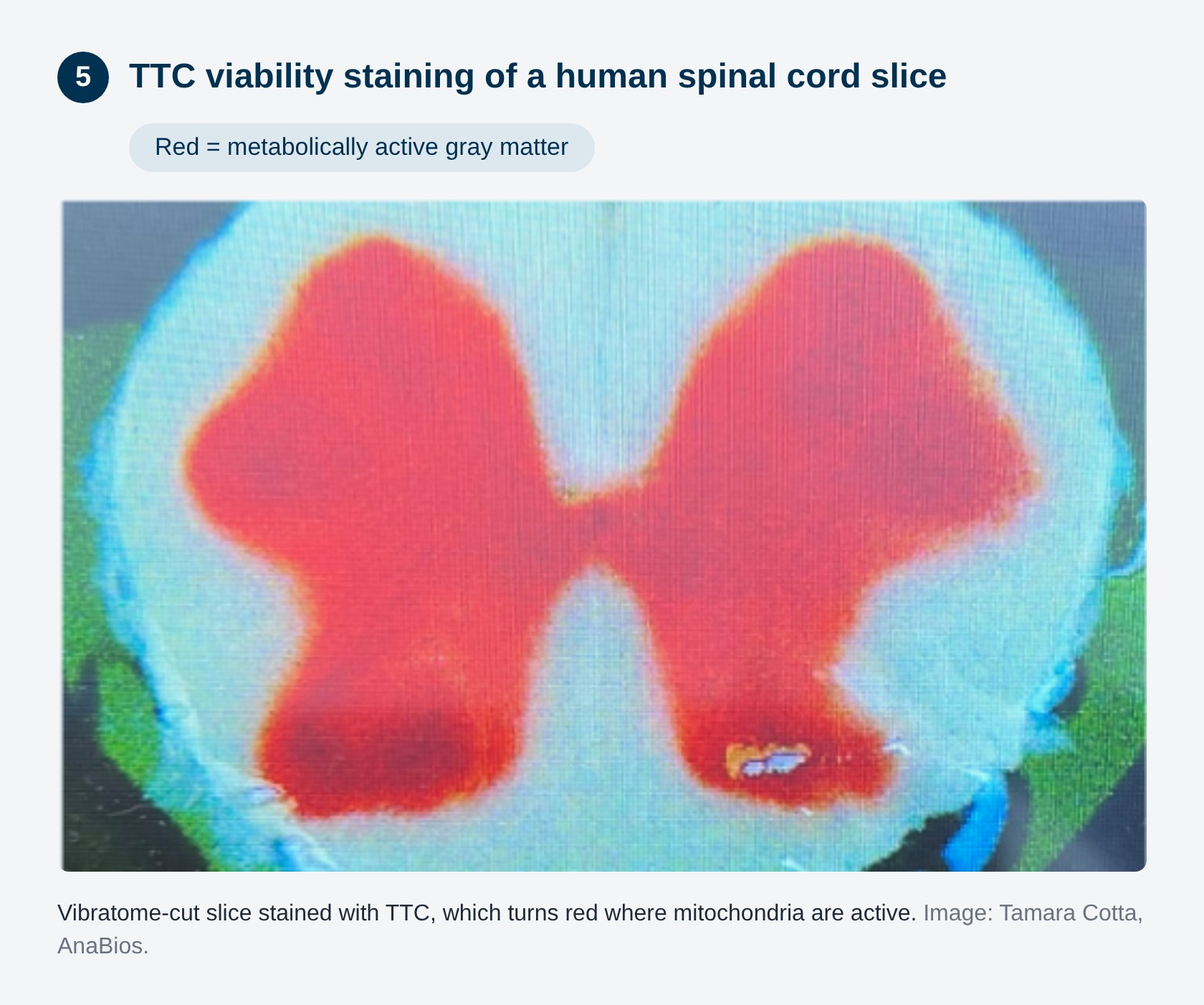
FIGURE 5

Weeks

Slices Built for Culture

Vibratome-cut slices can be kept in organotypic culture for weeks. TTC, a colorimetric marker of active mitochondria, stains the gray matter red, showing metabolically active tissue.

Image: Tamara Cotta, AnaBios.

MEASURED ON AN AGILENT BIOANALYZER

  • Average RIN above 9
  • 7 = threshold for expression analysis
  • RIN checked for every donor
  • Proprietary processing limits ischemic RNA and protein breakdown

RNA QUALITY

>9 RIN

Transcriptomics-Ready RNA

Ischemia during recovery can trigger necrotic and apoptotic pathways that degrade RNA and protein. Our processing limits that breakdown, so spinal cord RNA averages above 9.
Why Researchers Choose AnaBios Spinal Cord

Live, Functional Slices

Vibratome slices with spontaneous network activity, kept in organotypic culture for weeks.

RNA You Can Trust

Average RIN above 9, checked for every donor on an Agilent Bioanalyzer.

Pain-State Donors

Healthy donors plus fibromyalgia, neuropathic pain and osteoarthritis.

Your Vertebral Level

Samples from the vertebral levels your study specifies.

Built for Spinal Cord Research

COMPOUND TESTING

Test compound effects on human spinal cord neurons.

CALCIUM IMAGING

Record spontaneous network activity in live dorsal horn slices.

PAIN RESEARCH

Compare healthy and pain-state spinal cord.

GENE EXPRESSION

Run bulk RNA extraction, expression analysis and RNAscope.

PROTEOMICS

Profile proteins in flash-frozen or RNAlater-preserved tissue.

IMMUNOHISTOCHEMISTRY

Use formalin-fixed tissue for IHC, including CGRP.

Get the Spinal Cord Brochure

Fill out the form to download the PDF.

FUNCTIONAL ASSAYS

Pain-Related Assays

Let our team run pain studies in human tissue.

Explore Pain Assays

RELATED TISSUE

Human DRG

Pair spinal cord with dorsal root ganglia from healthy and pain-state donors.

Explore DRG Tissue

Frequently Asked Questions

Is the tissue viable for functional studies?

Yes. We recover viable tissue that can be vibratome-sliced and kept in organotypic culture for weeks. Slices show spontaneous calcium activity in dorsal horn neurons.

What is the RNA quality of your spinal cord tissue?

Average RIN is above 9, measured for every donor on an Agilent Bioanalyzer, compared with a threshold of 7 for expression analysis.

Do you offer spinal cord from pain-state donors?

Yes. In addition to healthy donors, we supply tissue from donors with fibromyalgia, neuropathic pain and osteoarthritis.

Can I choose the vertebral level?

Yes. Tell us the vertebral levels your study needs when you request a quote.

What formats are available?

Flash frozen, RNAlater-preserved and formalin-fixed tissue.

What can I use the tissue for?

Compound testing, calcium imaging, bulk RNA extraction, expression analysis, RNAscope, proteomics and immunohistochemistry.

HEALTHY AND PAIN-STATE DONORS

Tell Us Your Study. We’ll Match the Tissue.

Share the vertebral levels, donor criteria, format and readouts you need. Our team will come back with matching tissue and pricing.

  1. Share Your Requirements

    Vertebral levels, pain states, format and the readouts you plan to run.

  2. Review Donor Options

    We confirm availability from healthy and pain-state donors.

  3. Receive Your Tissue

    Viable tissue for slicing, or flash frozen, RNAlater or formalin-fixed samples.