LUNG RESEARCH
WEBINARS

CUSTOMIZED STUDIES

Tailored lung-related studies, leveraging human tissue samples

HUMAN-BASED MODEL

Utilizing human tissue samples to provide physiologically-relevant insights

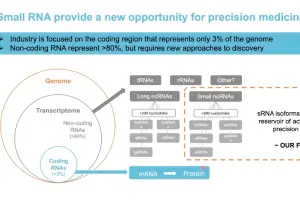
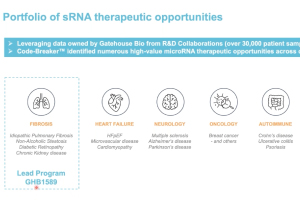
In this live installment of the AnaBios Translational Research Webinar Series, Dr. David Salzman, CEO of Gatehouse Bio, presents the discovery of a novel microRNA isomiR shown to protect against fibrosis, based on analysis of more than 2,500 patient samples. Loss of this isomiR—observed in approximately 70% of pulmonary fibrosis patients—correlates with disease progression and adverse clinical outcomes. Dr. Salzman introduces GHB1589, a precision oligonucleotide therapy designed to restore isomiR expression and reverse fibrosis-associated tissue damage. He shares preclinical data from in vitro, in vivo, and ex vivo studies, and discusses the use of a companion biomarker to enable targeted patient stratification. Together, these findings position GHB1589 as a first-in-class therapeutic approach for pulmonary fibrosis.

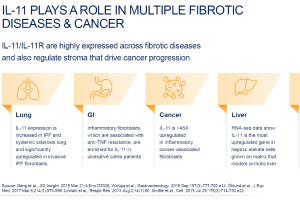
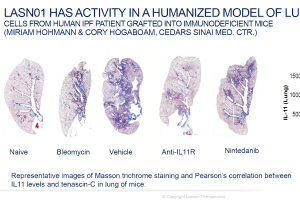
Jamie Swaney, Ph.D., Vice President of Fibrosis and Translational Biology at Lassen Therapeutics, will discuss the antibody-mediated blockade of interleukin-11 signaling for idiopathic pulmonary fibrosis and other fibrosing lung diseases. His presentation will focus on the background of IL11/IL11RA and their role in lung fibrosis and other fibrotic diseases, cell-specific expression and upregulation of IL11 in lung fibrosis, development and characterization of anti-IL11 receptor antibodies to treat lung fibrosis and use of primary cells, in vivo models and ex vivo translational assays to interrogate anti-IL11 therapy as a treatment for lung fibrosis. Dr. Swaney has more than 17 years of drug development experience in tissue fibrosis/remodeling and inflammation. Prior to joining Lassen, he was Executive Director and head of fibrosis at Metacrine, leading small molecule programs for NASH liver fibrosis. Dr. Swaney has contributed to several patents and authored multiple peer-reviewed publications. 

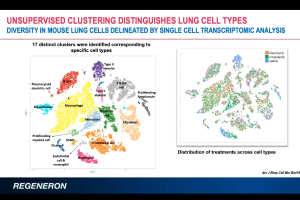
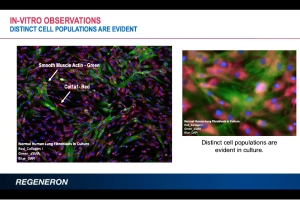
Dr. Scott MacDonnell, Associate Director of Cardiovascular and Fibrosis Research at Regeneron Pharmaceuticals, presented new research focusing on the use of single cell sequencing to identify cell populations from fibrotic tissue in this hour-long webinar. Dr. MacDonnell and his team used an unbiased single cell RNA-sequencing analysis of a bleomycin-induced pulmonary fibrosis model to characterize molecular responses to fibrotic injury. Lung cells were isolated to capture emerging fibrosis and gene expression was analyzed by three complementary techniques which together generated a 49-gene signature that defined an activated subpopulation of fibroblasts. However, none of the identified genes were specific to the activated cells or disease setting, implying that the activated fibroblasts are not uniquely defined but exhibit a similar—yet amplified—gene expression pattern to control cells.

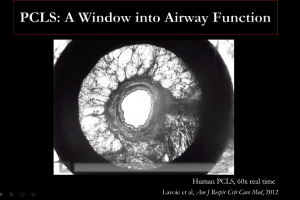
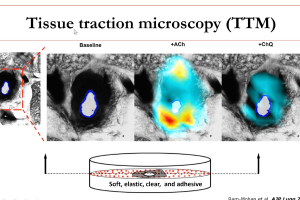
Respiratory complications are the primary cause of hospitalization in COVID-19 patients, with complex interactions between the virus, lung epithelial cells and immune cells leading to severe acute respiratory syndrome. As scientists race to develop therapeutics to fight the virus, it is important to have research tools available that provide highly translatable data. The precision cut lung slice (PCLS) discussed in this hour-long webinar, presented by Harvard professors Dr. Rama Krishnan and Dr. Joseph Brain, are an advanced paradigm for translational lung research and are an effective preparation for advancing lung-related physiology. Additional practical advantages of PCLS includes its ease of preparation, ease of storage (via cryopreservation), suitability for high-resolution microscopy imaging and inclusion of many species, particularly human.