It is a long established fact that a reader will be distracted by the readable content of a page when looking at its layout.

Download heart, lung and pain research posters
Human-based scientific evidence
This study demonstrates that the selective LPAR1 antagonist PIPE-791 delivers potent antifibrotic activity across primary human lung fibroblasts, precision-cut lung slices from patients with pulmonary fibrosis and multiple in vivo models of lung fibrosis. PIPE-791 reduced collagen production, inhibited myofibroblast transformation, decreased profibrotic gene expression and secreted remodeling biomarkers in human lung tissue, and significantly lowered lung collagen and inflammatory markers in bleomycin-induced models. For AnaBios, these findings reinforce the strategic value of human, tissue-based platforms to generate translationally relevant data that strengthens target validation, improves confidence in mechanism and supports more informed advancement of antifibrotic therapies into the clinic.
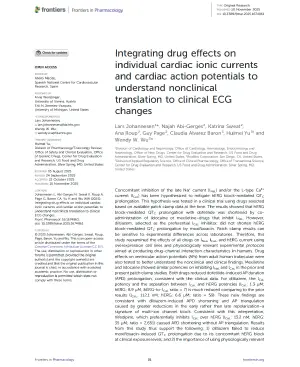
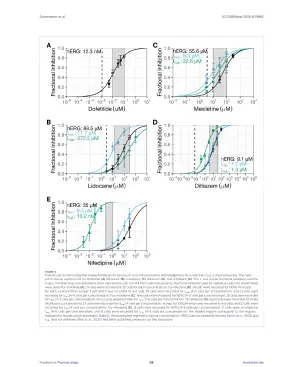
This peer-reviewed study, co-published with scientists from the U.S. Food and Drug Administration, advances the field of cardiac drug discovery by demonstrating how integrated assessment of multiple cardiac ion channels improves translation from nonclinical data to clinical ECG outcomes. Using physiologically relevant patch-clamp protocols and functional recordings from adult human ventricular trabeculae, the research reveals how multi-ion channel interactions—including hERG, late sodium (INaL), and L-type calcium (ICaL) currents—drive action potential dynamics and QT interval changes. The findings highlight the limitations of relying on single-channel assays alone and reinforce the importance of human-relevant cardiac models aligned with ICH S7B best practices for predicting proarrhythmic risk. Together, this FDA–AnaBios collaboration provides cardiac safety scientists and drug developers with a more mechanistic, human-focused framework for evaluating cardiac liability earlier and with greater confidence in drug development.
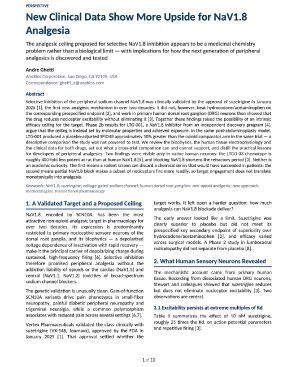
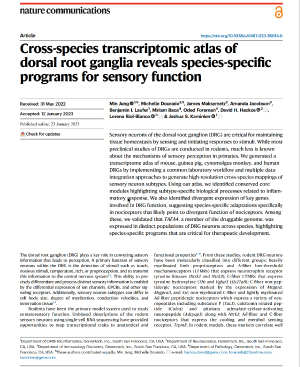
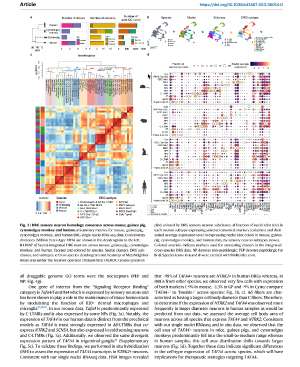
This paper (1) describes a protocol for efficient isolation of DRG nuclei from multiple species, (2) provides the high-resolution, comprehensive, detailed single-nucleus transcriptome atlas of DRG from pre-clinical to human samples, and (3) characterizse the transcriptional convergence and divergence of sensory neuron subtypes from rodents to humans. Thr results reveal that DRG sensory neuron subtypes are in general well-conserved across species. However, the paper identified key differences in gene products involved in pathophysiological processes which point to the potential for species-specific sensory neuron functions. Understanding the molecular and functional similarities and differences between somatosensory neurons in rodents and primates will enable a better understanding of the role of these neurons in sensory perception and tissue homeostasis, facilitating therapeutic efforts targeting sensory neurons.