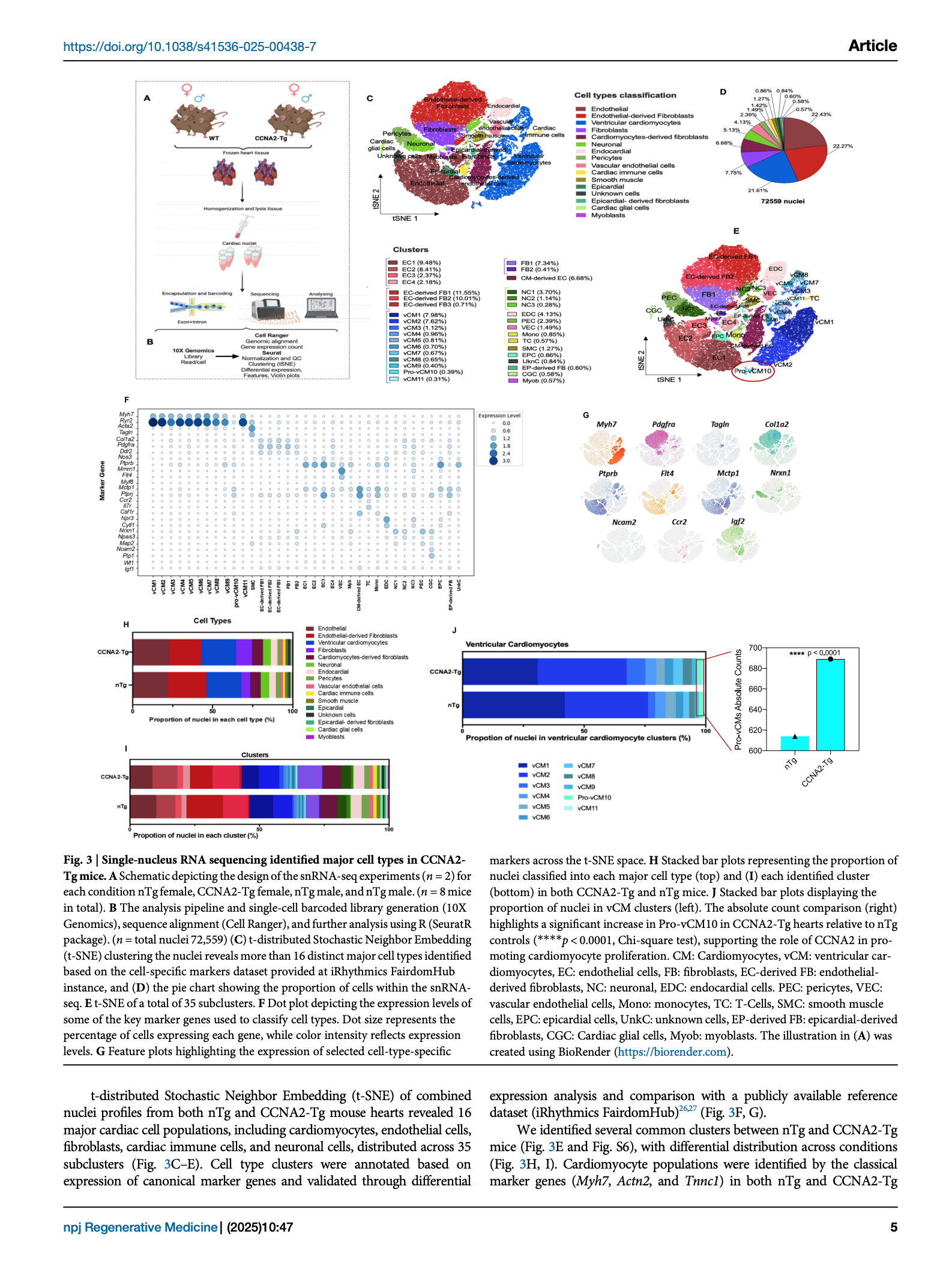
The adult human heart has long been considered incapable of self-repair, as mature cardiomyocytes lose the ability to divide. A new study challenges this by showing that a protein called Cyclin A2 (CCNA2) can reactivate cell division in adult human cardiomyocytes. Using a targeted gene delivery system, researchers introduced CCNA2 into cardiomyocytes isolated from adult human hearts, with live imaging confirming that cells underwent complete division while retaining structural integrity and calcium signaling in the resulting daughter cells. Advanced genomic analyses of mouse and human heart tissue revealed conserved genetic pathways that explain how CCNA2 drives these effects and identified a distinct cardiomyocyte subpopulation primed for proliferation and reprogramming — pointing to CCNA2 as a promising gene therapy strategy for cardiac regeneration in patients recovering from heart failure or injury.
PUBLICATION: BioRxiv (2025)
AUTHORS: Najah Abi-Gerges, Hina Chaudhry, Andre Ghetti, Paul Miller, Amir Khan, et al.