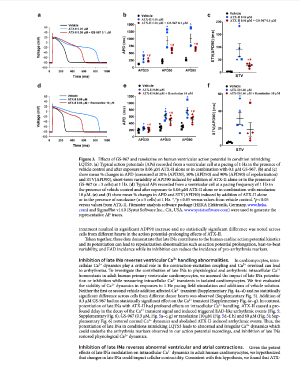
Abnormal electrical activity in the heart — known as cardiac arrhythmia — remains a major therapeutic challenge, and the late sodium current (late INa) has emerged as a promising target for intervention. Using adult primary cardiomyocytes and tissue from donor hearts, researchers investigated the role of late INa in arrhythmia generation under both drug-induced and disease conditions. When late INa was artificially amplified, cells exhibited disrupted repolarization, impaired calcium handling, and increased arrhythmic activity — effects that were reversed by late INa inhibitors ranolazine and GS-967. Notably, atrial tissue from donor hearts with existing atrial fibrillation showed spontaneous arrhythmic behavior that was significantly reduced upon late INa inhibition. These findings establish late INa as a key driver of cardiac arrhythmias and support its inhibition as a viable therapeutic strategy, while also underscoring the value of human ex-vivo heart models in advancing cardiac research.
PUBLICATION: Scientific Reports (2021)
AUTHORS: Najah Abi-Gerges, Ahn-Tuan Ton, William Nguyen, Andre Ghetti, Paul Miller, Alexa Stafford, Katrina Sweat, Tiara Wong, et al.