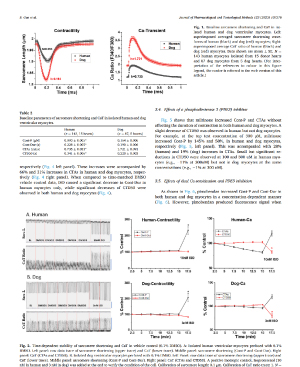
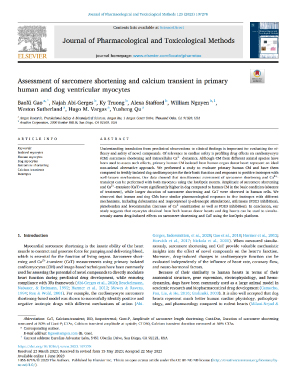
Bridging the gap between preclinical drug testing and clinical outcomes is essential for accurately evaluating the safety and efficacy of new cardiac therapies. A key aspect of this is understanding how drugs affect cardiomyocyte contractility and calcium handling — two processes central to heart function. This study directly compared primary human cardiomyocytes, isolated from donor hearts, with freshly isolated dog cardiomyocytes, assessing both their baseline function and their responses to five well-characterized inotropic agents. While dog cardiomyocytes showed greater amplitude in sarcomere shortening and calcium transients under baseline conditions, human cells exhibited longer durations of both measures. Notably, both cell types showed similar pharmacological responses across all five inotropes tested, spanning multiple mechanisms of action. These findings support the use of both human donor-derived and canine cardiomyocytes as complementary, reliable models for simultaneously evaluating drug-induced effects on cardiac contractility and calcium dynamics — and reinforce the value of primary human cardiomyocytes as a clinically relevant, non-animal alternative for cardiac safety profiling.
PUBLICATION: Journal of Pharmacological and Toxicological Methods (2023)
AUTHORS: BaoXi Gao, Najah Abi-Gerges, Ky Truong, Hugo Vargas, Alea Stafford, William Nguyen, et al.