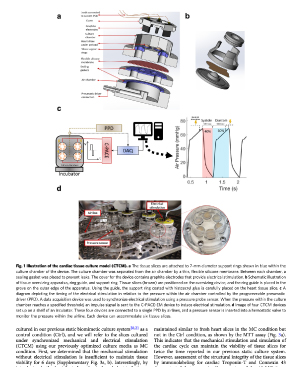
Reliable in vitro models that accurately replicate the heart’s physiological environment are essential for meaningful drug testing, yet existing systems have fallen short. Researchers developed a cardiac tissue culture model (CTCM) capable of applying physiological mechanical stretch to living heart slices throughout the cardiac cycle, mimicking the natural contraction and relaxation of the heart. While electro-mechanical stimulation alone improved tissue viability, full structural preservation required the addition of two small molecules — tri-iodothyronine (T3) and dexamethasone — to the culture media. With this combined approach, heart slices maintained their structural integrity, transcriptional profile, viability, and metabolic activity for 12 days at levels comparable to fresh tissue. The system also demonstrated the ability to model disease states, as deliberate overstretching of the tissue triggered cardiac hypertrophic signaling — a hallmark of heart disease. Together, these findings establish the CTCM as a robust platform for emulating both normal and pathological cardiac physiology over extended periods, offering a more reliable foundation for preclinical drug screening.
PUBLICATION: Communications Biology (2022)
AUTHORS: Najah Abi-Gerges, Tamer Mohamed, Jessica Miller, Moustafa Meki, Ahmed Elnakib, Cindy Lin, Fahmi Khalifa, et al.