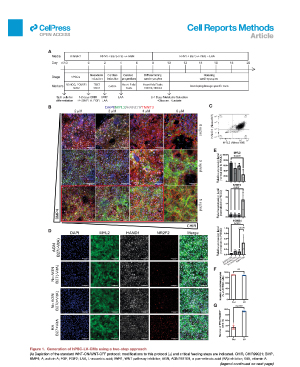
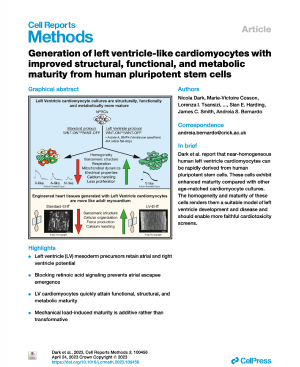
Damage or genetic mutations affecting the left ventricle (LV) — the heart’s primary pumping chamber — are a leading cause of severe and often fatal cardiovascular disease, making LV cardiomyocytes an important therapeutic target. A key obstacle in studying and treating these conditions has been the inability to produce human stem cell-derived cardiomyocytes that are sufficiently mature and specific to the LV. By applying insights from cardiac development, researchers identified that precise mesoderm patterning and blocking of the retinoic acid pathway are critical steps for directing stem cells toward a near-homogenous population of LV-specific cardiomyocytes. Compared to those generated by standard protocols, these cells demonstrated superior metabolic activity, reduced proliferation, and greater structural and functional maturity. Engineered heart tissues built from these cells were better organized, generated higher contractile force, and could be paced to physiological rates. Critically, this level of maturity was achieved rapidly and without the maturation regimens typically required — representing a meaningful advance in the development of more accurate and practical human cardiac models.
PUBLICATION: Cell Reports Method (2023)
AUTHORS: Nicola Dark, Najah Abi-Gerges, Paul Miller, Marie-Victoire Cosson, Lorenza Bouissou, et al.