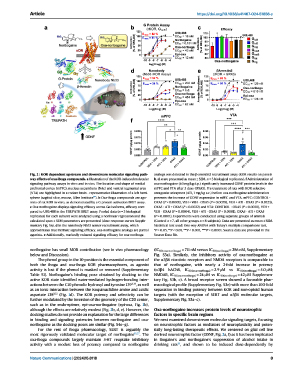
Ibogaine and its metabolite noribogaine have shown promise in treating substance use disorders and co-occurring mental health conditions, but their clinical potential has been limited by significant cardiac safety risks and complex mechanisms of action. Researchers have now developed a new class of iboga alkaloids — called oxa-iboga compounds — created by structurally modifying the iboga skeleton to incorporate a benzofuran group. Critically, these new compounds showed none of the proarrhythmic effects of ibogaine and noribogaine when tested in primary human cardiomyocytes. In animal models, oxa-iboga compounds demonstrated superior efficacy against opioid use disorder, acting as potent kappa opioid receptor agonists while displaying atypical behavioral profiles compared to standard agents in that class. Most notably, a single dose or short treatment course of oxa-noribogaine produced long-lasting reductions in morphine, heroin, and fentanyl consumption, reversed opioid-induced hypersensitivity to pain, and suppressed drug-seeking behavior in relapse models. These findings position oxa-iboga compounds as a mechanistically distinct and potentially safer class of therapeutics for addressing the opioid crisis.
PUBLICATION: Nature Communications (2024)
AUTHORS:Václav Havel, Najah Abi-Gerges, Andrew C. Kruegel, Benjamin Bechand, Scot McIntosh , Leia Stallings, et al.